

SERVICE
Digital Product Design
INDUSTRY
Technology / Education
LOCATION
Canada
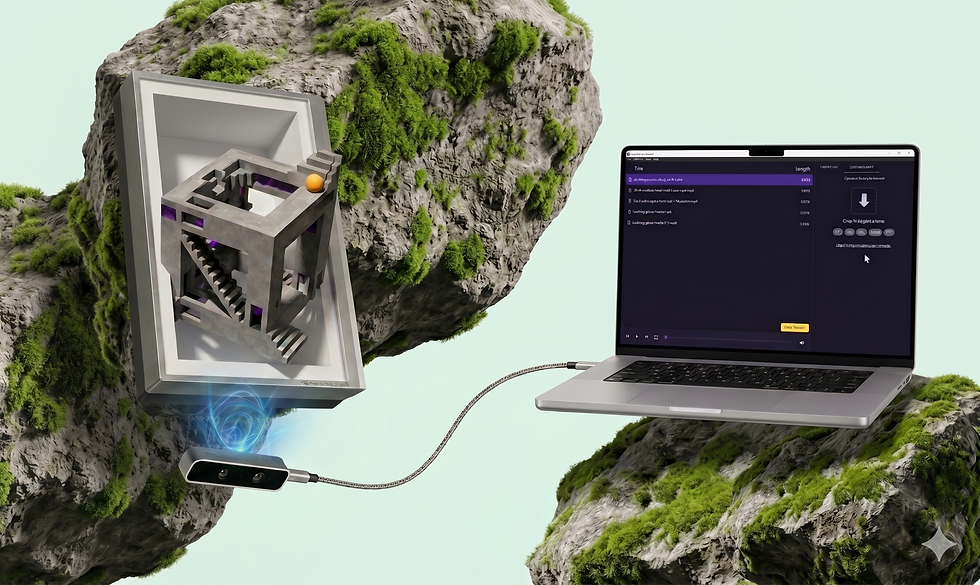
Research project explored the implementation of Looking Glass holographic displays at Humber College to create an interactive showcase for student work. By utilizing light field technology and lenticular lenses, the project allows multiple people to view and interact with 3D content simultaneously without the need for VR or AR headsets.
Humber Looking Glass Project (Canada)
How did I start
What I do
My Role: I served as a lead designer focusing on research, 3D modeling, interaction design, and animation to align the technical capabilities with the project’s showcase goals.
My Process: My approach involved conducting secondary research on light field technology and performing rigorous technology testing. I collaborated with team members to iterate on the design based on performance feedback and user interaction studies.

The Problem
Rendering complex 3D scenes from multiple perspectives in real-time creates a high computational demand that can lead to processing lag. We also had to overcome the technical challenges of integrating Leap Motion sensors to ensure that interactive gesture controls remained responsive within the holographic environment.
1
The Solution
We developed an interactive 3D maze puzzle that allows users to manipulate elements through natural hand gestures like swiping, grabbing, and rotating. This setup effectively demonstrates how the Looking Glass can be used as a collaborative tool to showcase diverse programs such as game design, graphic design, and 3D modeling.
2
What I found
The design process
The process began with an in-depth technical comparison between Looking Glass technology and traditional VR/AR systems, focusing on the core principles of light field rendering. We decided to use Leap Motion integration to empower users to manipulate 3D models through intuitive hand gestures. To demonstrate the practical application of this technology, we designed a 3D maze mini-game as the primary sample piece. This involved optimizing 3D scenes for high-performance rendering while ensuring the interaction remained engaging and accessible for a student-led showcase.


The final design
The final research project successfully demonstrated an innovative way for Humber College students to present their work in an equipment-free, interactive environment. By transforming 3D content into a memorable, hands-on experience, the Looking Glass platform provides a futuristic solution for group learning and collaborative design exhibitions.




Silent Logic
Bold Beauty